
The Otherhood: Living In Between
A raw reflection on living between cultures, belonging everywhere and nowhere, and finding quiet community in The Otherhood.
8/6/20252 min read
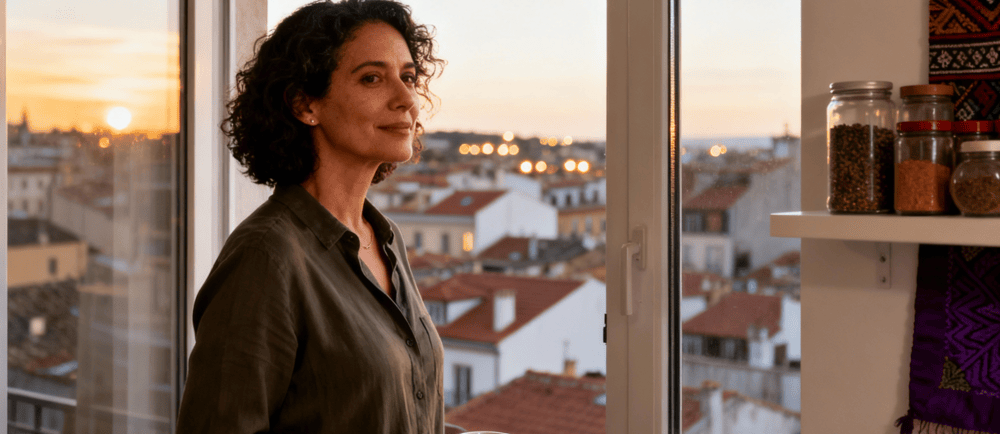

The Dual Existence of the Global Citizen
Living in more than one culture at a time does something strange to you.
You can feel at home in places you have never officially lived. You can miss people you have not seen in years and still feel oddly distant when you are back in the place that raised you. People might call you “so international” like it is a compliment, but underneath that label there is a whole mix of emotion that has nothing to do with flight routes or passport stamps.
Moments of Cultural Dislocation
Picture this: you are in the kitchen, cooking a dish from “home,” answering voice notes from three time zones, scrolling in a language you did not grow up speaking.
Nothing dramatic is happening, but something feels slightly off. You belong everywhere and nowhere at the same time. You move easily between accents, recipes, and references, yet there is always a part of you that feels a half step out of sync.
Those are the small moments where the in-between shows itself.
The Otherhood: A Space of Belonging
That in-between is what I call The Otherhood.
It is the quiet community of people who have left one world without fully landing in another. Maybe you moved countries. Maybe your body lives in one culture and your mind lives in another. Maybe you never moved at all, but the way you think, love, or work no longer matches the place that raised you.
You carry pieces of different cultures inside you, yet you do not feel fully claimed by any of them. You might worry that you are too “foreign” for one place and too “local” for another. It can be lonely, even when your life looks impressive from the outside.
Being “international” sounds glamorous. It can also sit on top of doubt, fatigue, and the constant question: Where do I actually belong now?
The Otherhood is where that question is allowed to exist out loud.
The Beauty and the Cost
Living between cultures does give you a wider lens. You notice nuance. You understand that there is more than one “normal.” You can read a room in more than one language. Your empathy stretches across borders almost automatically.
But there is a cost.
You are always translating yourself. You keep relationships alive through screens and odd-hour calls. You adapt, then adapt again. You may feel guilty for leaving, or resentful for staying. You might have a version of yourself for each place and no clear instruction on how to hold them all at once.
It is not just about balancing identities. It is about admitting that all of them are real, even when they do not fit neatly together.
Owning Your Place in the Otherhood
If you recognize yourself in this, you are not being dramatic. You are not “too sensitive.” You are simply living a life that spans more than one story, more than one place, more than one version of you.
The small scenes matter:
The way you mix spices from one culture with groceries from another.
The way your tongue switches languages mid-sentence.
The way traditions blur and re-form inside your home.
These are not random details. They are proof of the life you have built across borders.
Understanding yourself as part of the Otherhood can shift everything. Instead of seeing your split loyalties and mixed emotions as a problem to fix, you begin to see them as the truth of who you are.
You are not stuck between worlds. You are carrying them.