
When the Holidays Don’t Feel Like Home Anymore
For diaspora and mixed-culture women whose holidays no longer feel like home, this essay explores grief, distance and building small, honest new rituals.
HOLIDAYS
12/8/20254 min read
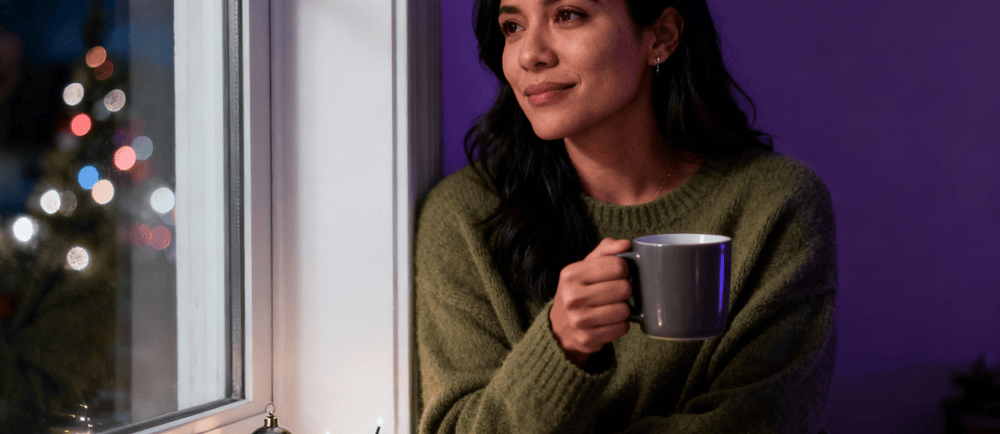

When the Holidays Don’t Feel Like Home Anymore
There is a moment, usually sometime in late November or early December, when the world seems to slide into a script you no longer believe in.
Lights go up. Ads get louder. Families post matching pajamas. The group chats start filling with travel plans and menus.
You scroll through it all and feel… nothing. Or worse, a mix of envy, irritation, and a strange kind of ache you can’t name.
It’s not that you hate the holidays. It’s that they don’t feel like home anymore.
Not after everything that has happened. Not after everything you’ve seen.
When “home for the holidays” is a complicated sentence
For some women in The Otherhood, “home” is not a single place.
Home is the country that raised you.
Home is the country you live in now.
Home is the people who loved you well.
Home is also the people who hurt you.
Home is the version of you who survived it.
Going back might not be simple. Maybe your family is there, but so is the abuse nobody talks about. Maybe going back means being misgendered, disrespected, or shoved back into a role you outgrew years ago. Maybe flights are too expensive. Maybe your passport situation is messy. Maybe you have built a pretty good life elsewhere and visiting reopens wounds you are still tending.
Staying where you are is also not simple. Your chosen family may be scattered. Friends are with their own families. Your partner is working. Your kids are with your ex this year. Or you live in a place where your holiday isn’t the dominant one, so everything that feels sacred to you is just… another day.
You are caught between options that don’t fully hold you.
No wonder the holiday playlist feels off.
The grief underneath “I’m just not a holiday person”
It’s easier to roll your eyes at the season than to admit what lies under the surface.
Sometimes “I’m not a holiday person” really means:
“The people I would want to celebrate with are gone or far.”
“My family makes this time of year feel like a test I always fail.”
“My childhood holidays were chaotic, painful, or full of pretending.”
“I don’t see my culture, my race, my family structure in any of the ‘happy family’ images.”
“Everything changed after that one year, and it never went back.”
The world keeps yelling “joy!” at a volume that feels almost rude when you are carrying unprocessed grief, distance, or disappointment.
You are not broken for struggling with this season. You just have a more honest memory than the marketing department.
When your traditions don’t match your current life
Maybe you were raised with big, loud, extended-family holidays and now it’s just you and one friend, or you and your dog, or you and your kid in a small apartment in another country.
Maybe your holiday used to revolve around a church or mosque or temple you no longer attend. Maybe you used to make food for people who never appreciated it, and now cooking feels like a job, not a joy.
Maybe you left a relationship, a religion, or a whole old self, and the rituals that once meant “safety” now feel like a costume you’re not willing to wear.
So what do you do with dates that still hold meaning in your body, but no longer match your reality?
You resist the urge to numb through it. And you experiment.
Building tiny, honest rituals
You don’t need a perfect new tradition to deserve a meaningful holiday. You need one true thing.
One meal that feels like actual comfort, not obligation.
One person you can talk to without performing.
One hour where you let yourself feel what you feel instead of what you “should.”
One gesture that honors your past and your present at the same time.
That might look like:
Lighting a candle for people you miss, instead of pretending you’re fine.
Calling the one friend who understands your mixed feelings about family.
Cooking a small version of a holiday dish just for you, no audience.
Mixing songs from your childhood with new music that fits the woman you are now.
Volunteering or giving something, not to earn goodness points, but to remember you’re still connected to others.
Tiny, honest rituals beat big, fake ones every time.
Letting yourself be “the first”
In some families, nobody has ever:
Spent a holiday alone without it being a tragedy.
Skipped the gathering on purpose.
Admitted that certain relatives are unsafe.
Said, “I’m not coming this year. I need peace.”
If you are the first, it will feel like betrayal. People might call you selfish, dramatic, ungrateful, or “too sensitive.” They may frame your choices as an attack instead of a boundary.
But here is the thing: somebody has to be the first.
Somebody has to stop dragging the same tired, painful script into the next generation. Somebody has to model that it’s okay to choose mental and emotional safety over appearances. Somebody has to show that the holidays can evolve, not just repeat.
It is lonely work at the beginning. It is also sacred.
Borrowing belonging until yours grows
If your own holidays feel thin, you are allowed to borrow.
Borrow warmth from a friend’s table this year.
Borrow a tradition from your partner’s culture.
Borrow a recipe, a playlist, a walk in a city that is still learning your name.
Borrow the idea that future years can look different, even if this one is still tender.
You do not have to fix the whole season in one attempt. You are planting small, stubborn seeds of a different kind of December, a different kind of “home.”
The Otherhood is full of women doing exactly that: sitting in apartments far from where they started, quietly deciding that the way they were raised is not the only template for celebration.
You’re allowed to want more
You don’t have to pretend the holidays don’t matter to you if they do.
You’re allowed to admit: “I want warmth. I want ease. I want a room where I don’t have to split myself into versions to be welcome.”
That wanting is not childish. It is a compass.
It will not change everything overnight. But it will guide how you say yes, how you say no, and how you slowly build holidays that feel like they actually belong to you.
Until then, if all you manage this year is one honest breath, one true ritual, one moment of gentleness toward yourself?
That counts.
In The Otherhood, we honor that as much as any big, glittering celebration.